YEAR
2022-2024
ROLE
individual
METHODS
CRITICAL DISCOURSE ANALYSIS, DIGITAL ethnography, PARTICIPANT OBSERVATION, KUMU NETWORK MAPPING
COLLABORATORS
PROF. WESLYNNE ASHTON
(Thesis Supervisor)
PROJECT OVERVIEW
I conducted ethnographic research across Chicago's food landscape to understand how different organizations narrate food insecurity. Through critical discourse analysis of 16 organizations spanning policy, industry, nonprofits, and grassroots movements, I mapped three distinct visions of food system transformation. The resulting landscape of 'imaginaries' show the need to work with multiple visions of 'common good' rather than assuming alignment around shared goals. This study led to the creation of the Mapping Imaginaries Toolkit and the Narrative Infrastructures framework. The work was published at the RSD13 (Relating Systems Thinking and Design Symposium).
CONTEXT
Chicago's food insecurity crisis brings together diverse stakeholders, each working toward shared goals but holding different visions for the future.
1 out of every 5 Chicago resident lacks sustained access to nutrition, with the crisis concentrated in historically disinvested Black and Latinx communities. Public policy organizations, food industry, nonprofits, and grassroots groups all work to address this, using shared language around 'food access' and 'sustainability.' As part of my doctoral research, I conducted ethnographic research across this organizational ecosystem to understand what different visions were actually driving their work beneath the shared vocabulary
CHALLENGE
How can we embrace the diverse visions of 'common good' when building our shared futures?
When groups come together for collective impact, they start by building a shared vision. But what if that shared vision is an illusion? Everyone nods when you say 'sustainability' or 'equity.' The real disagreements stay hidden beneath these words.
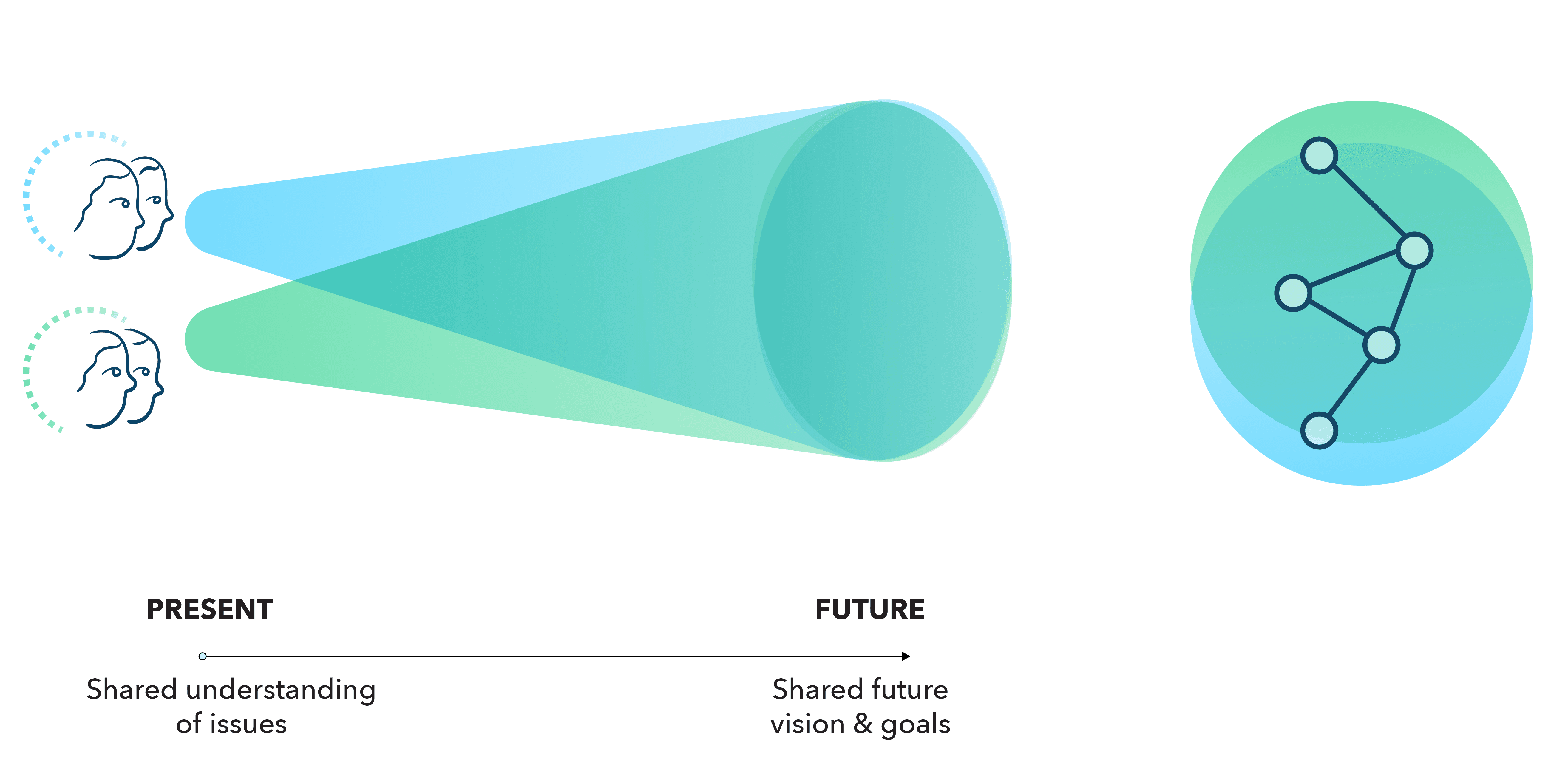
Stakeholder alignment is traditionally seen as forming a shared understanding of issues and a shared future vision of 'common good' to mobilize towards.
BUILDING OUR SHARED FUTURES REQURIES understanding different meanings of 'common good' rather than ASSUMING consensus.
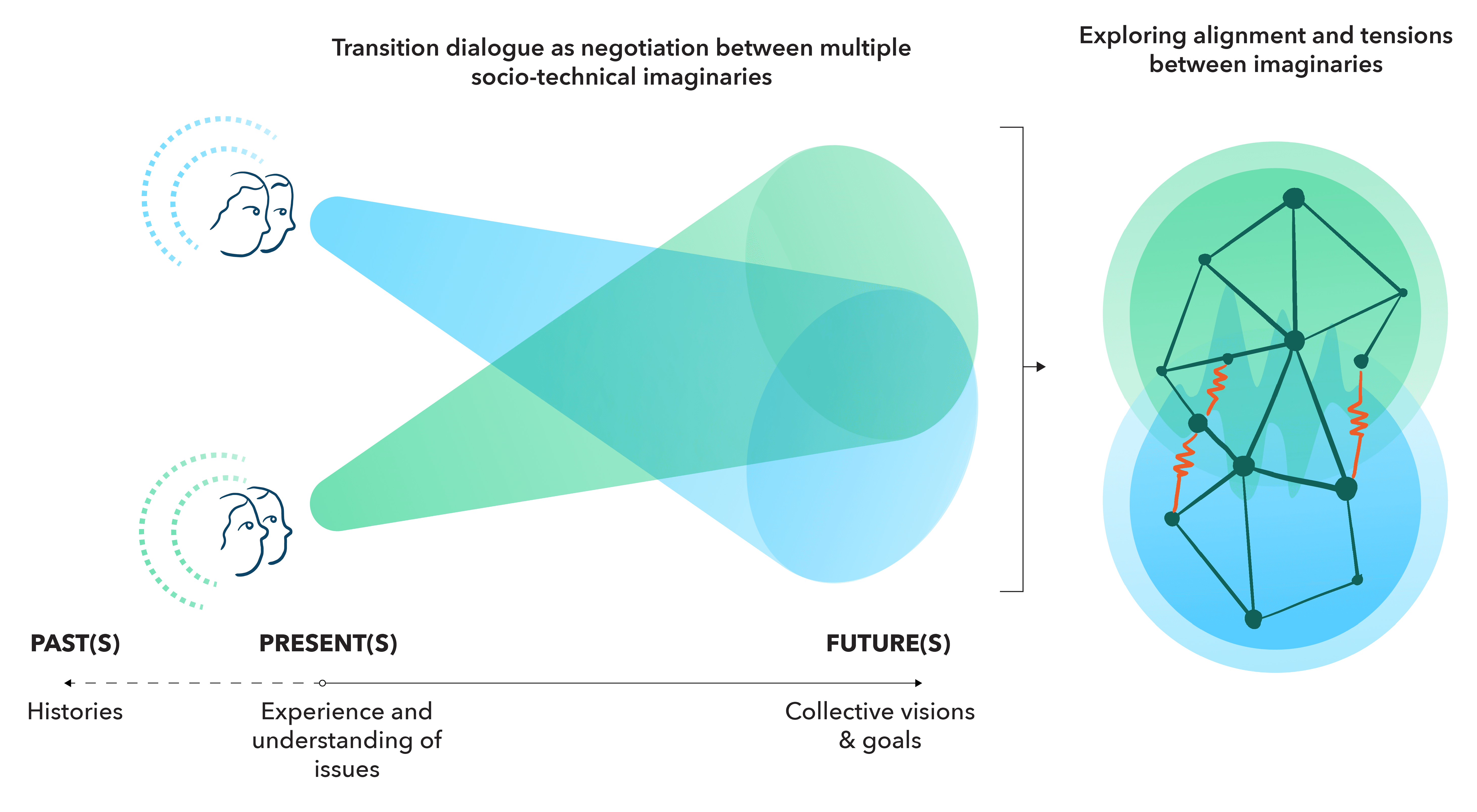
Imaginaries are collective visions for desirable futures. They emphasize that, beyond shared objectives, a desirable future might look different for different social groups.
One groups's sustainable food system centers efficient supply chains and green tech. Another's centers community ownership and ending racial capitalism. These aren't just different strategies—they're different stories about what went wrong and what a good future should look like. The challenge was finding a way to surface these competing visions instead of burying them under language everyone could agree to.
APPROACH
I studied stakeholder narratives to reveal competing visions hidden beneath shared goals.
Narratives offer a way past the surface language. Unlike mission statements or impact metrics, looking at the entire change narrative of a stakeholder group shows a fuller picture: what a group believes went wrong, who they see as driving change, what they're trying to build, and crucially, what they're up against.
A goal like 'food access' only gains meaning when we understand it in relation to everything else a group aspires to. Are they fighting against inefficient distribution systems? Or against centuries of racist policy that deprives some zip codes from grocery stores?
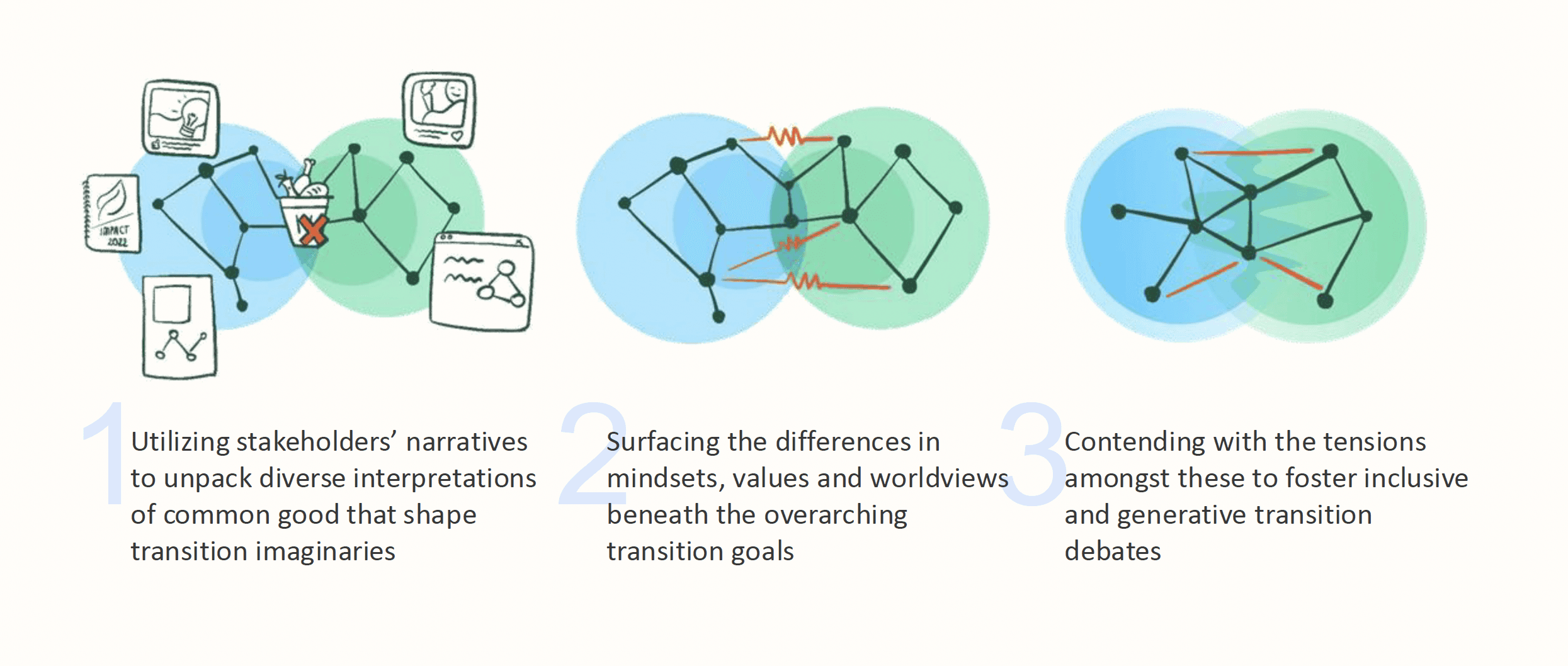
I developed a process to use stakeholder narratives to unpack diverse meanings of common good, surface differences and content with emerging tensions
SAMPLING & DATA COLLECTION
I sampled 16 organizations working to address food insecurity across sectors and studied how they frame the desired change.
SAMPLING
I started by mapping Chicago's food insecurity landscape, identifying over 200 organizations and community groups working on the issue. From this, I selected 16 organizations through purposive sampling to represent different sectors: public policy agencies, food industry businesses, nonprofits, and grassroots community organizations.
DIGITAL ETHNOGRAPHY
I analyzed their publicly available materials—websites, annual reports, social media, policy documents—breaking down their narratives into core elements: what goals they pursue, what practices they employ, what knowledge systems they draw from, and what metrics they use to measure success.
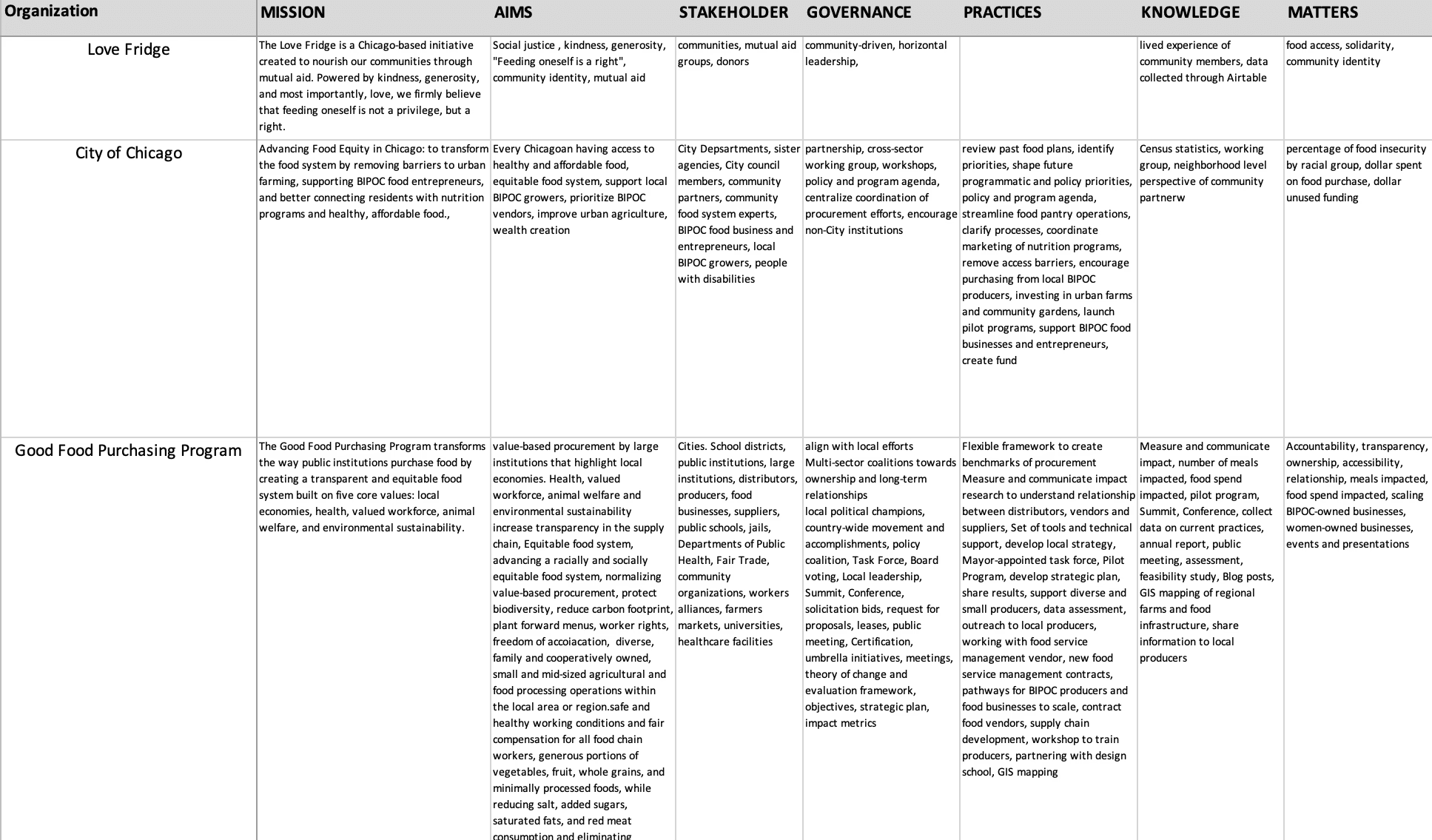
Analysis table shows stakeholders' narrative broken down into the main components of their theory of change such as their mission, governance model, metrics.
PARTICIPANT OBSERVATION
Beyond digital ethnography, I spent time observing how these groups perform their visions in practice. I attended food justice summits, policy meetings, and community gatherings. I volunteered with food rescue operations and watched how different organizations articulate their work in these spaces.
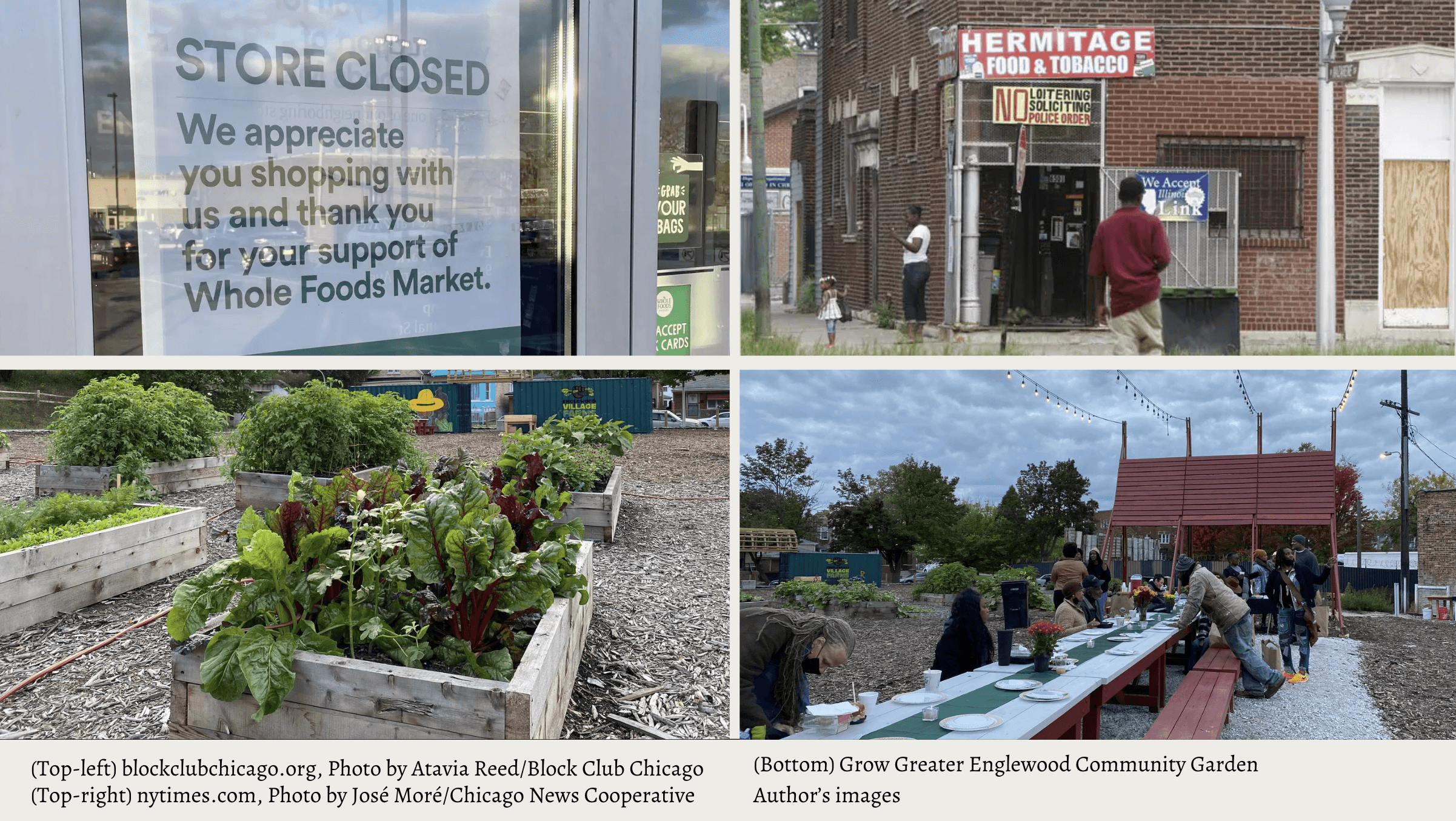
In the face of food apartheids in Chicago's south and west-side neighborhoods, communities create alternative local food systems where neighbors grow and share food, caring for each other and the soil.
ANALYSIS
I mapped which organizations shared goals, revealing shared objectives and divergent visions for a 'good food system'.
For the analysis, I created a matrix mapping which organizations articulated which future goals—sustainability, community empowerment, economic development, food sovereignty, and others. This revealed patterns: some goals clustered together consistently while others appeared in isolation
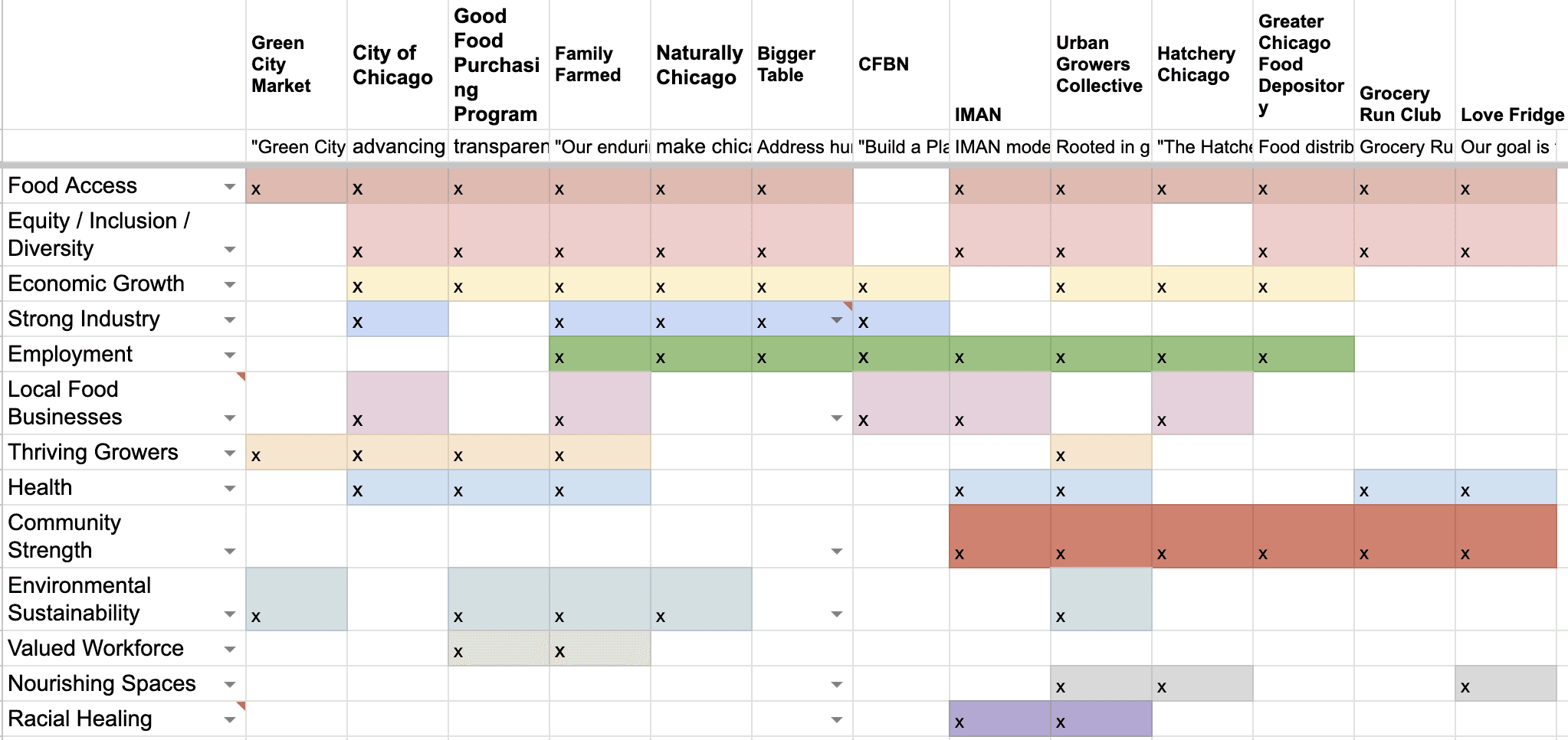
Matrix view shows the high-level systems change goals (horizontal) and organizations that mention them in their narratives (vertical).
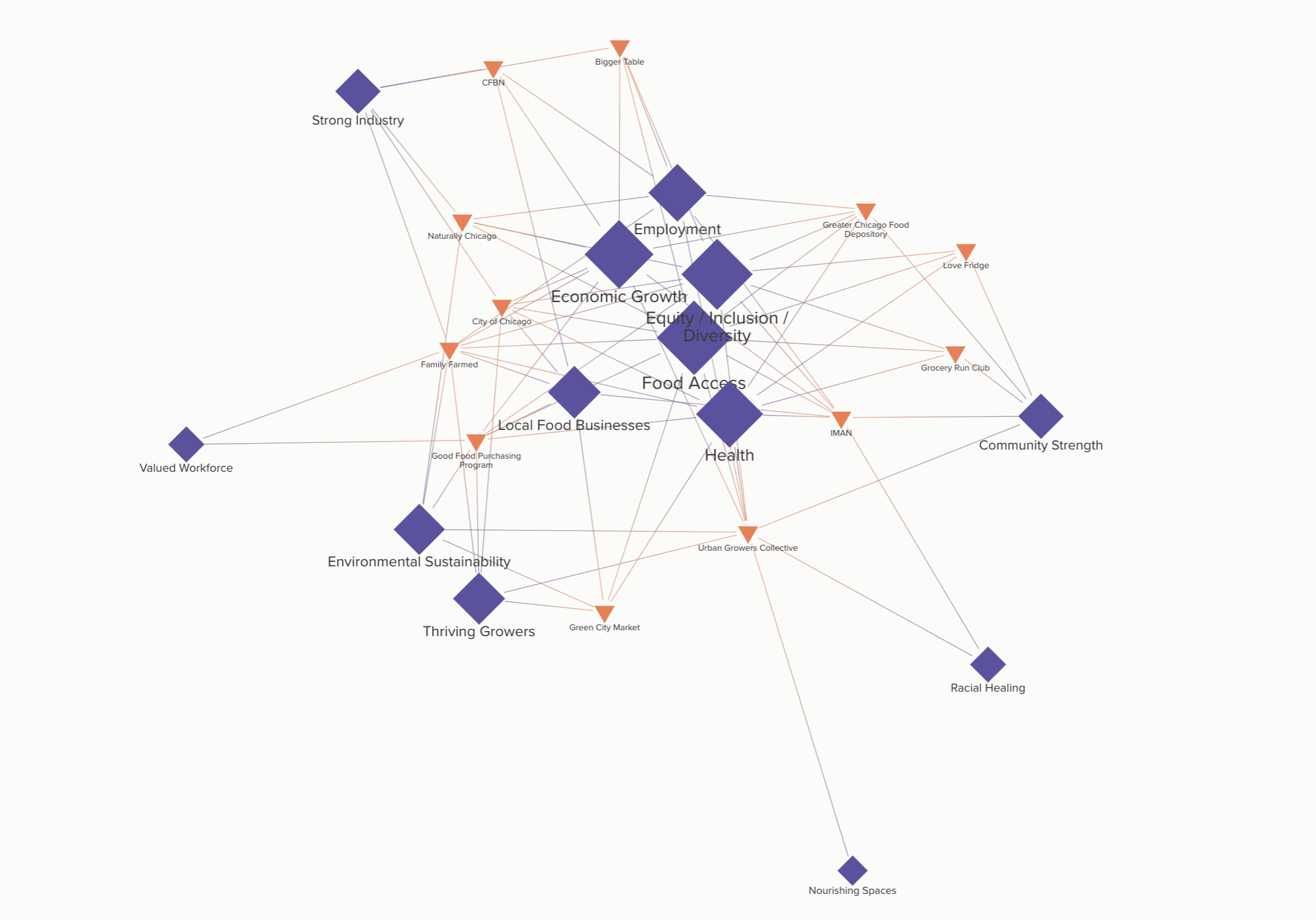
I then built a network visualization in Kumu, connecting organizations to their stated goals. The visualization showed distinct clusters—organizations that shared similar constellations of goals, even when they used different language to describe them. These weren't random groupings. Each cluster represented a fundamentally different way of understanding food insecurity and what transformation should look like.
SYNTHESIS
Three distinct visions emerged from the analysis, revealing fundamental differences to be negotiated
The analysis revealed three narrative territories, centering on different visions of an ideal food system: Sustainable Cities (focusing on resource allocation and infrastructure), Syrong & Sustainable Food Industry (centering sustainable business and economic development), and Grassroots Organizing (emphasizing food sovereignty and dismantling racist systems).
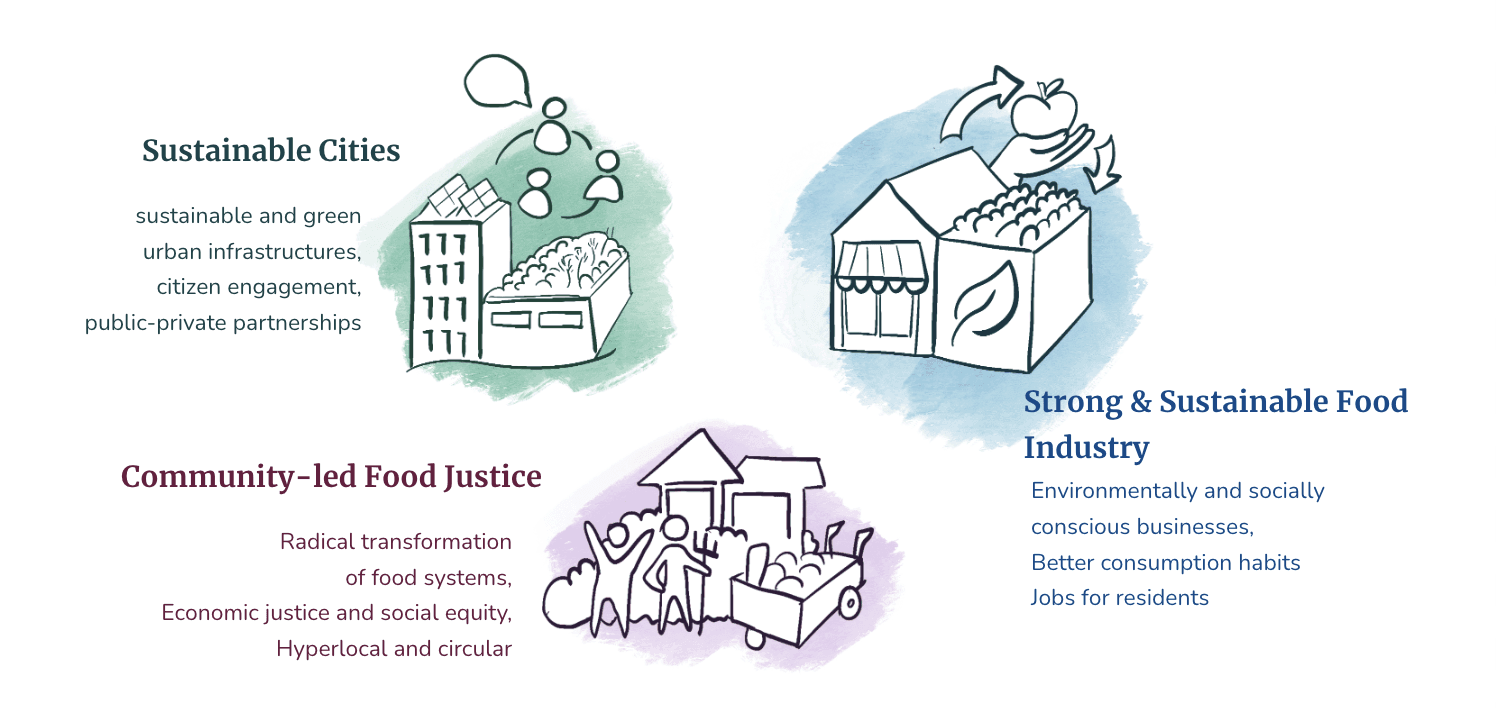
Three 'imaginaries' of food system transformation emerged from the analysis of narratives.
These vISIONS weren't just different APPROACHES for solving the same problem. They represented DIVERGENT beliefs about where the problem actually lies.
This work demonstrates an approach for using narratives to embrace the plurality of perspectives when designing for systems change. Share shared goals of "equity" and "sustainability" do not necessarily create alignment but might obscure the diverse worldviews that need to be made visible and reconciled in the collaborative work of shifting systems. Rather than assuming there is one vision we are building towards, this methodology helps surface the multiple visions of common good involved in systems change, their intersections and tensions.
IMPACT
The approach of using narratives to identify imaginaries the foundation for the toolkit and conceptual framework I developed through my doctoral research.
Most collective impact efforts assume you need one unified vision. This work shows a different path: surface the multiple visions people actually hold and work with them, rather than forcing everyone into the same frame.
This study led to two methodological developments. First, the Mapping Imaginaries Toolkit, which translates the analytical approach into practical tools for practitioners working across competing stakeholder visions. Second, the Narrative Infrastructures framework, which examines how the design of communication systems shapes what kinds of transformation can be articulated in the first place.
This study is part of a research presented at the 2024 RSD Symposium as "Cultivating Narrative Resistance in Systemic Design."